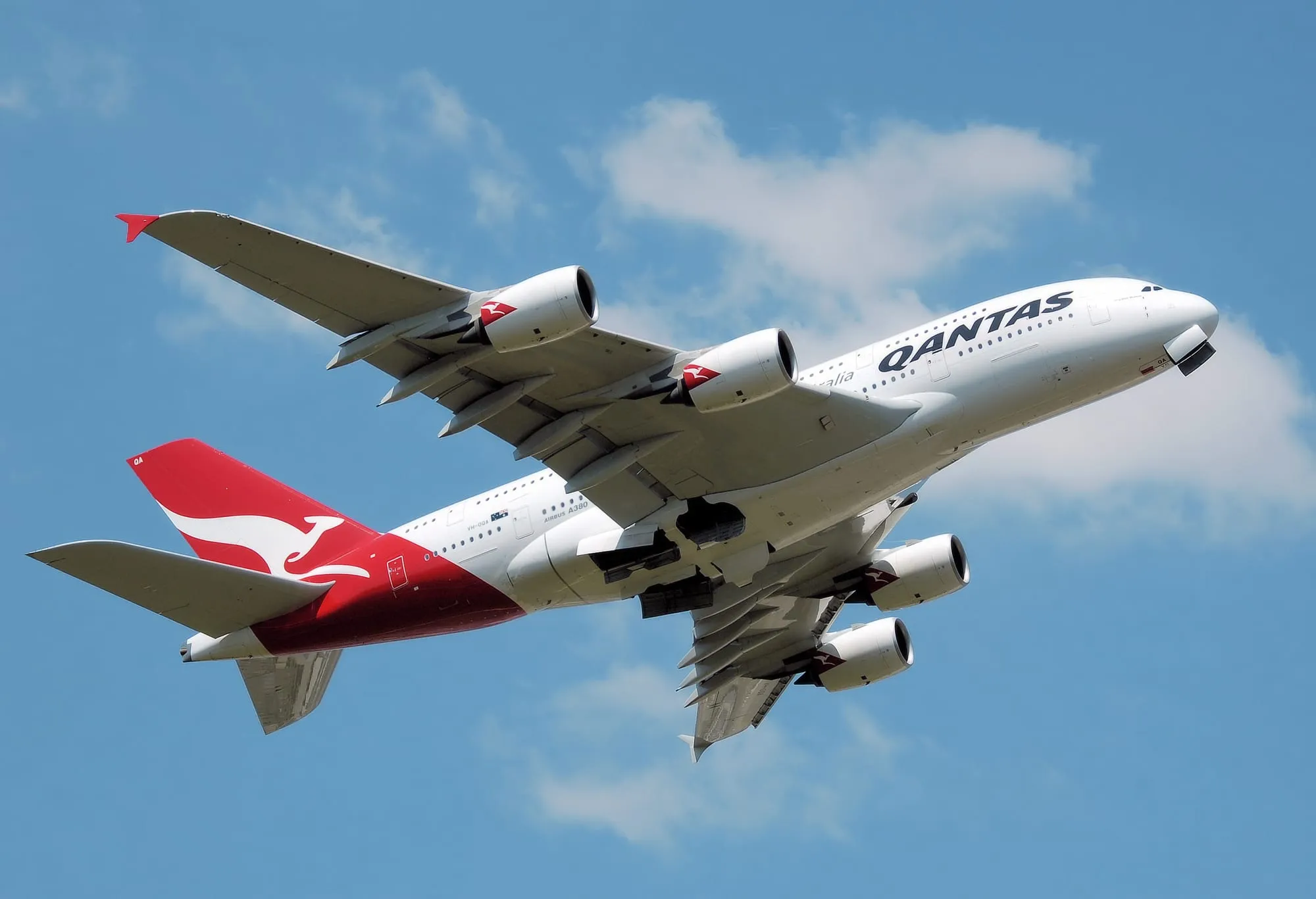
Qantas Frequent Flyer members booking the same seat on the same aircraft can pay wildly different numbers of points depending on which of two reward systems has inventory that day. Classic Flight Rewards price from a fixed distance chart. Classic Plus Flight Rewards price from the commercial airfare at a conversion rate Qantas has never published. On long-haul premium cabins the second system costs roughly two and a half times the points for an identical seat.
The two have coexisted since Classic Plus launched on international routes in July 2024 and expanded to domestic and regional flights on 12 December 2024. Qantas presented the expansion as adding more than 20 million reward seats, on top of the more than 5 million Classic seats it offers annually across Qantas, Jetstar and 45 partner airlines.
How each system sets a price
Classic Flight Rewards are priced from a published chart split into ten distance zones. Cost depends on one-way flight distance, cabin, and which carrier table applies. It does not move with demand. A Sydney to Melbourne business seat costs 19,300 points in January and 19,300 points in the September school holidays.
Qantas increased chart pricing on 5 August 2025 by between 5 and 20 per cent. The current Qantas table, covering Qantas, Jetstar, American Airlines, Fiji Airways and qualifying Emirates flights, runs as follows.
| Zone | One-way distance (miles) | Economy | Prem. Economy | Business | First |
|---|---|---|---|---|---|
| 1 | 0 – 600 | 9,200 | 14,500 | 19,300 | 29,000 |
| 2 | 601 – 1,200 | 13,800 | 21,600 | 29,000 | 43,600 |
| 3 | 1,201 – 2,400 | 20,700 | 32,600 | 43,600 | 65,300 |
| 4 | 2,401 – 3,600 | 23,300 | 50,600 | 68,400 | 102,600 |
| 5 | 3,601 – 4,800 | 29,000 | 61,600 | 82,100 | 123,100 |
| 6 | 4,801 – 5,800 | 36,200 | 73,800 | 98,400 | 147,700 |
| 7 | 5,801 – 7,000 | 43,200 | 85,300 | 113,900 | 170,800 |
| 8 | 7,001 – 8,400 | 48,200 | 97,600 | 130,100 | 195,400 |
| 9 | 8,401 – 9,600 | 58,900 | 113,900 | 151,800 | 227,800 |
| 10 | 9,601 – 15,000 | 63,500 | 124,700 | 166,300 | 249,400 |
Economy redemptions rose about 10 to 15 per cent on 5 August. Long-haul premium cabins took roughly 20 per cent. Premium redemptions under 2,400 miles rose about 5 per cent, which is why the chart steps sharply between Zone 3 and Zone 4 in the premium columns and only mildly in economy.
Classic Plus works from the cash fare instead:
Points required = (lowest available cash fare − taxes and carrier charges) ÷ conversion rateThe conversion rates are approximately 1.0 cent per point in economy and 1.25 cents in premium economy, business and first. Qantas has never published them. They were inferred from search results by the loyalty press, which initially observed 1.5 cents in international premium cabins. Around September 2025, about fourteen months after launch, that rate dropped to 1.25 cents with no announcement, raising the points cost of every international premium Classic Plus seat by 20 per cent overnight. Qantas said afterwards that international settings had been adjusted to align with the domestic rollout.
A published award chart can only be devalued by publishing a new one. An unpublished conversion rate can be changed without telling anyone.
What the ceiling does to value
Because Classic Plus is capped at a fixed cents-per-point rate, the ratio between the two systems reduces to a single relationship: the Classic Plus points cost divided by the Classic points cost equals the Classic yield divided by the Classic Plus rate. Wherever a Classic redemption returns more than 1.25 cents per point, Classic Plus is worse by exactly that multiple.
Short sectors, one-way:
| Route | Cabin | Classic points | Cash fare | Classic yield | Classic Plus points | Multiple |
|---|---|---|---|---|---|---|
| SYD–MEL | Economy | 9,200 + $52 | $185 | 1.45c | ~13,300 | 1.4x |
| SYD–MEL | Business | 19,300 + $80 | $569 | 2.53c | ~39,100 | 2.0x |
| SYD–PER | Economy | 20,700 + $74 | $401 | 1.58c | ~32,700 | 1.6x |
| SYD–PER | Business | 43,600 + $103 | $1,595 | 3.42c | ~119,400 | 2.7x |
| MEL–AKL | Economy | 20,700 + $169 | $375 | 1.00c | ~20,600 | 1.0x |
| SYD–AKL | Business | 43,600 + $174 | $1,050 | 2.01c | ~70,100 | 1.6x |
Long-haul, return:
| Route | Cabin | Classic points | Cash fare | Classic yield | Classic Plus points | Multiple |
|---|---|---|---|---|---|---|
| SYD–LAX | Prem. Economy | 195,200 + ~$760 | $4,118 | 1.72c | ~269,000 | 1.4x |
| SYD–LAX | Business | 260,200 + ~$1,300 | $9,072 | 2.99c | ~622,000 | 2.4x |
| SYD–LHR | Business | 332,600 + ~$1,776 | $11,500 | 2.92c | ~778,000 | 2.3x |
| SYD–LHR | First | 498,800 + ~$1,776 | $16,791 | 3.01c | ~1,201,000 | 2.4x |
The more the cash ticket is worth, the worse Classic Plus performs against the chart, because the chart price is capped and the Classic Plus price is not.
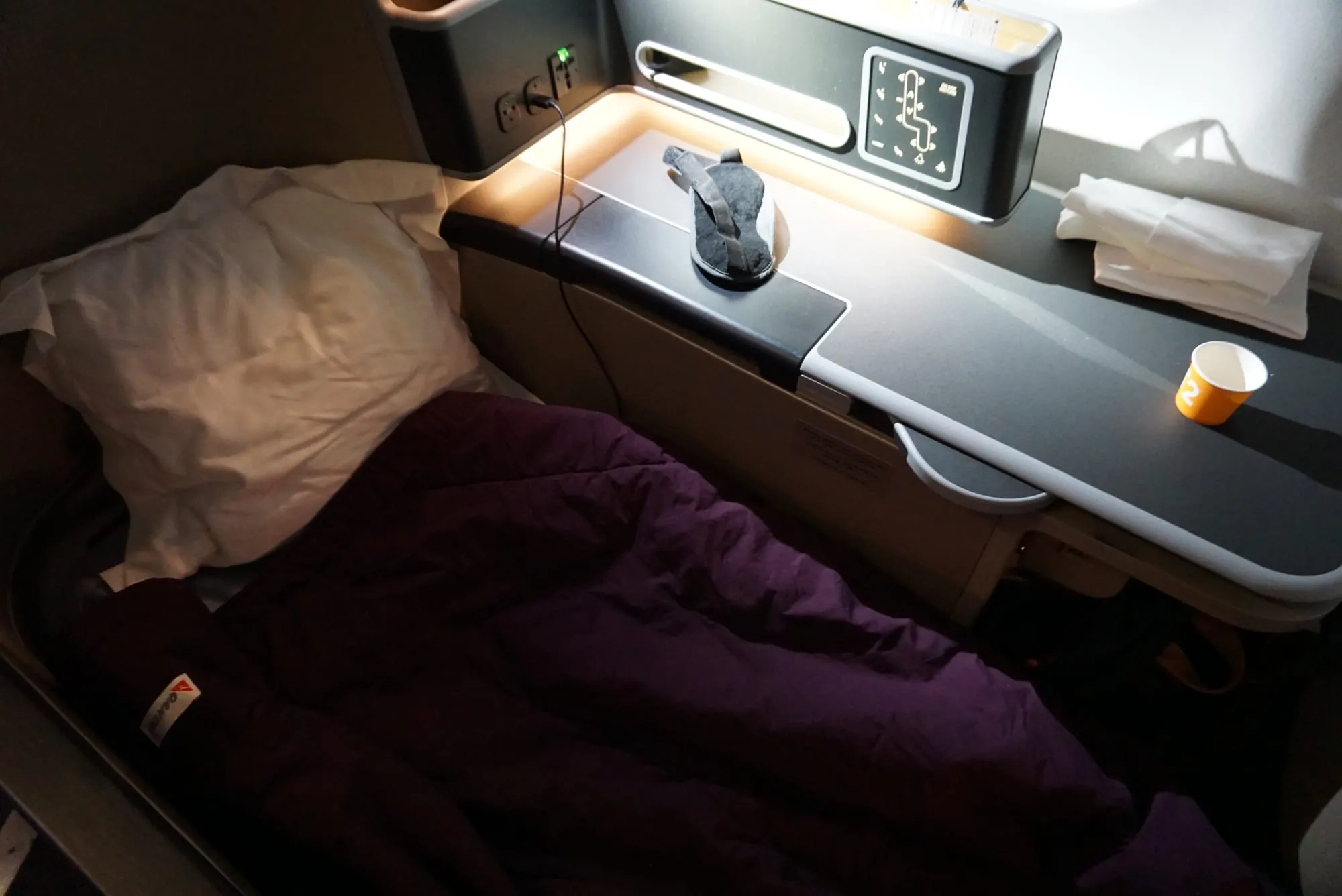
Qantas positions Classic Plus as the answer to unavailable Classic seats during peak periods. Peak periods are when commercial fares are highest, so a peak-period Classic Plus booking is the most expensive version of the least efficient option. A Sydney to Perth business seat quoted near 119,000 points off a $1,595 fare can run considerably higher on school holiday pricing.
Trans-Tasman is the exception. Competition between Qantas, Air New Zealand and Jetstar pushes fares low enough for the 1.0 cent economy rate to undercut the chart. A one-way Sydney to Auckland economy fare below roughly $370 including taxes prices under the fixed 20,700 points. Business does not follow: the 43,600-point chart price only loses if the retail fare drops beneath about $719.
The 20 million seats
Qantas has held its Classic commitment at more than 5 million seats annually while the member base grew from 12.9 million in 2019 to 16.4 million in 2024, an increase of 27 per cent. More members compete for a fixed pool.
The 20 million figure that offsets this is not new capacity. Classic Plus maps to commercial fare buckets K, R, D and A, so the seats counted were already on sale. Members can now buy them with points at a capped rate. The expansion added a payment method, not aircraft.
Access to the Classic pool is also rationed by status. Classic Rewards open 353 days before departure for Platinum One, Platinum and Gold, 323 days for Silver and 297 days for Bronze. Premium long-haul Classic inventory on routes like Sydney to London is routinely taken by top-tier members close to a year out. A Bronze member searching inside six months will rarely find it, which leaves the capped product as the practical default for the members getting the least from the program.
Operational costs beyond the headline price
| Parameter | Classic Flight Rewards | Classic Plus |
|---|---|---|
| Pricing | Fixed distance chart | Cash fare ÷ unpublished rate |
| Economy rate | Variable, typically 1.3c – 2.0c | Capped at 1.0c |
| Premium rate | Variable, typically 2.0c – 3.5c | Capped at 1.25c |
| Carriers | Qantas, Jetstar, oneworld, 45 partners | Qantas-operated only |
| Inventory | Award buckets X, Z, U, P | Commercial buckets K, R, D, A |
| Booking window | 297 – 353 days by tier | Commercial schedule |
| Change fee | 5,000 points | 5,000 points |
| Fare difference on change | Paid in points | Paid in cash |
| Cancellation | 6,000 points | 6,000 points |
| Connections | Distance aggregated under 24 hours | Priced as separate legs |
| oneworld multi-carrier | Eligible, 365,800 points Zone 10 business | Ineligible |
| Upgrade waitlist | Behind Classic Plus | Ahead of Classic |
A member who changes a Classic Plus booking to a flight retailing $250 higher pays that $250 in cash, plus the 5,000-point fee. Points cannot cover the difference. On a Classic Reward the same change is settled in points. Distance aggregation is the other difference: a two-sector journey on Classic Plus costs the sum of both legs, where the chart prices the whole itinerary from origin to destination.
Classic Plus is limited to Qantas-operated flights. It cannot be used on any of the 45 partner airlines and cannot form part of a oneworld Classic Flight Reward, which now caps a Zone 10 multi-carrier business itinerary at 365,800 points.
Classic Plus does hold two advantages. It retains award-style cancellation rules, and it returns roughly double Points Plus Pay, which sits near 0.5 cents per point after successive devaluations. Booking an international economy sale fare as Classic Plus also restores points-upgrade eligibility that the equivalent cash sale fare does not carry.
Neither reward type earns points or status credits for general members. The exception has been Points Club and Points Club Plus, whose members earn status credits on Qantas-marketed flights under either type at the same rate. Qantas will retire Points Club on 8 December 2026, with existing members keeping benefits until the end of their next membership year. The airline has said a Qantas Points-earning credit card will offer status credits on Classic Reward bookings after the retirement, without naming the card or the terms.
A point costs something to acquire, in the same cents per point. Qantas Wine bonus offers are one of the few places that figure can be read off in advance, and the tracker on this site ranks every live offer on it, updated hourly. Anything acquired above 1.25 cents is already behind before it is spent on Classic Plus, and a Classic premium seat returning 2.0 to 3.5 cents is what a well-priced case has to beat.
Photographs by Adrian Pingstone (A380, public domain), MDRX (business suite) and Kgbo (737s), the last two under CC BY-SA 4.0 via Wikimedia Commons.